


A scientific expedition with a taste of vacation: A full day in the forest and the first night of rest – August 7

After the intensity of the first few days, this moment of the expedition brought an unexpected pause. No rush, no long hikes early in the morning, just an opportunity to observe, explore, and simply be present in the forest.
Between small encounters with wildlife around the camp, moments of more solitary exploration, and preparing for another night of fieldwork, this day revealed something essential: the best moments do not always come from constant action, but from the ability to stop, observe, and pay attention to what is happening around us.
In an environment where anything can happen at any moment, even a simple breakfast can turn into a unique opportunity.

The blessed breakfast
On this second day, everything started more calmly. There was no need to rush to pack up camp, no need to go out and deploy audiomoths. We could rest. Enjoy the time in the forest. And the first step was to recharge, which meant going for breakfast.
Since our tents were at the top of the hill, we had to walk down through the camp. If you do not know me, you probably do not realize how much I enjoy photographing and observing animals. And usually, around camps, there are always plenty of them.
The first thing that came to mind was this: if something interesting shows up, am I really going to run all the way back up the hill to grab my camera, then run back down, probably miss the shot, and end up exhausted? It was about a 20-minute walk, which means 10 minutes running. Did I really want that? Absolutely not.
So, like any slightly obsessive person would do, I took the camera with me to breakfast. And it turned out to be the right decision. The following photos are proof of that.
We arrived at the table and our cook immediately laid everything out for us. To be honest, I do not always remember what we ate. What I do remember is the rice cooking water drink, which I really did not like. Maybe because I spent half the time looking outside, searching for animals, talking, sharing stories. But mostly looking outside.
And that is exactly how I spotted the first rodent, feeding on food scraps. There was no waste management as such, leftovers were simply thrown down the ravine next to the benches.
I kept eating and photographing the rodent. When it appeared, I took a few shots. When it disappeared into the bushes, I went back to eating. After breakfast, we usually stayed sitting, talking and watching the forest in front of us.
And then, suddenly, there it was. The most beautiful bird we saw during the entire expedition. The blues were unbelievable. The Madagascar Blue Vanga is a near-threatened species, although at the time that did not even cross my mind. I just wanted to capture a photograph that could show its beauty.


The camp
We returned to our small camp at the top of the hill, where the sounds of the main camp did not reach us, and nature took over completely. Our tent was near a path that went down into the forest. I did not know where it led or how steep it was, but I was eager to explore.
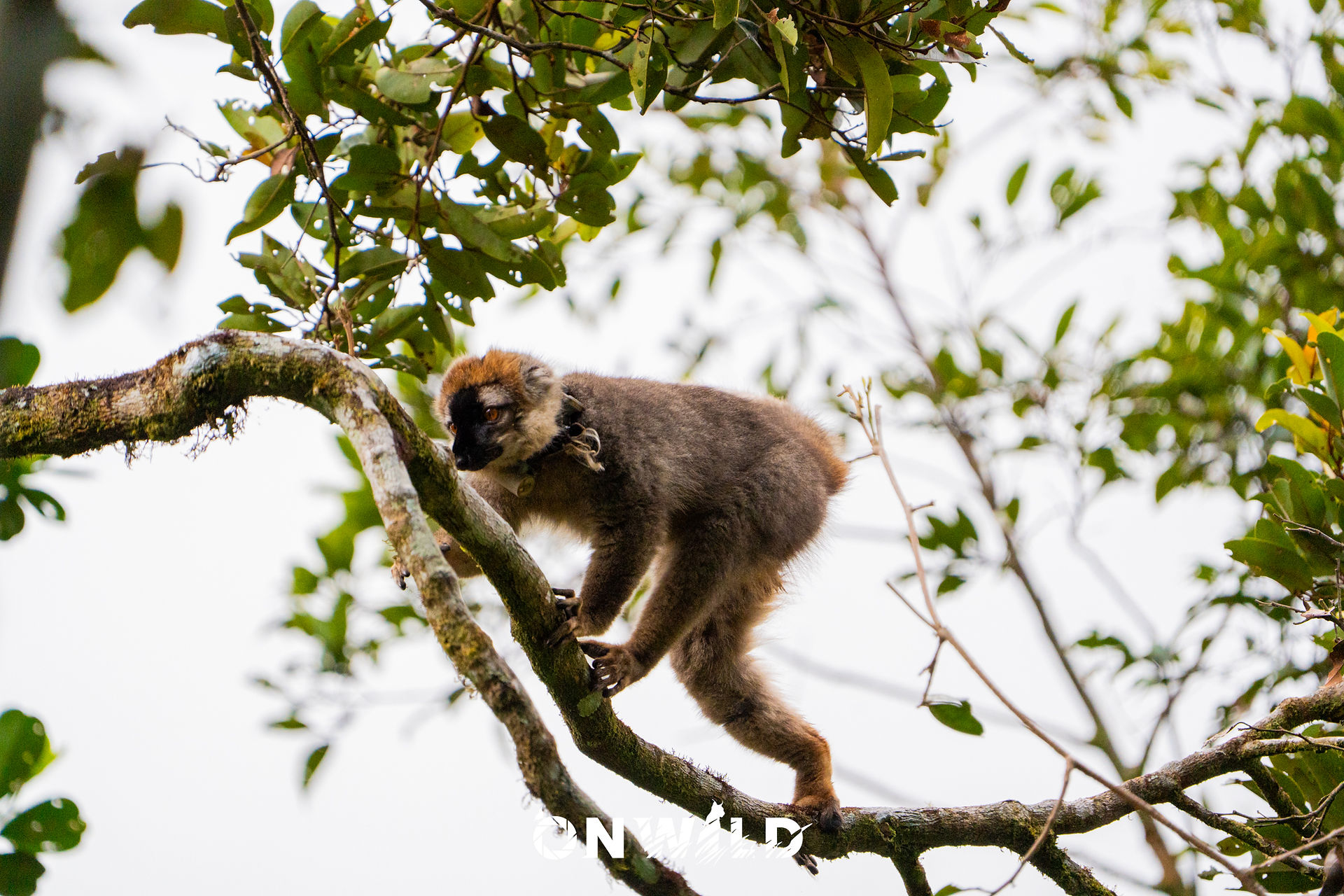
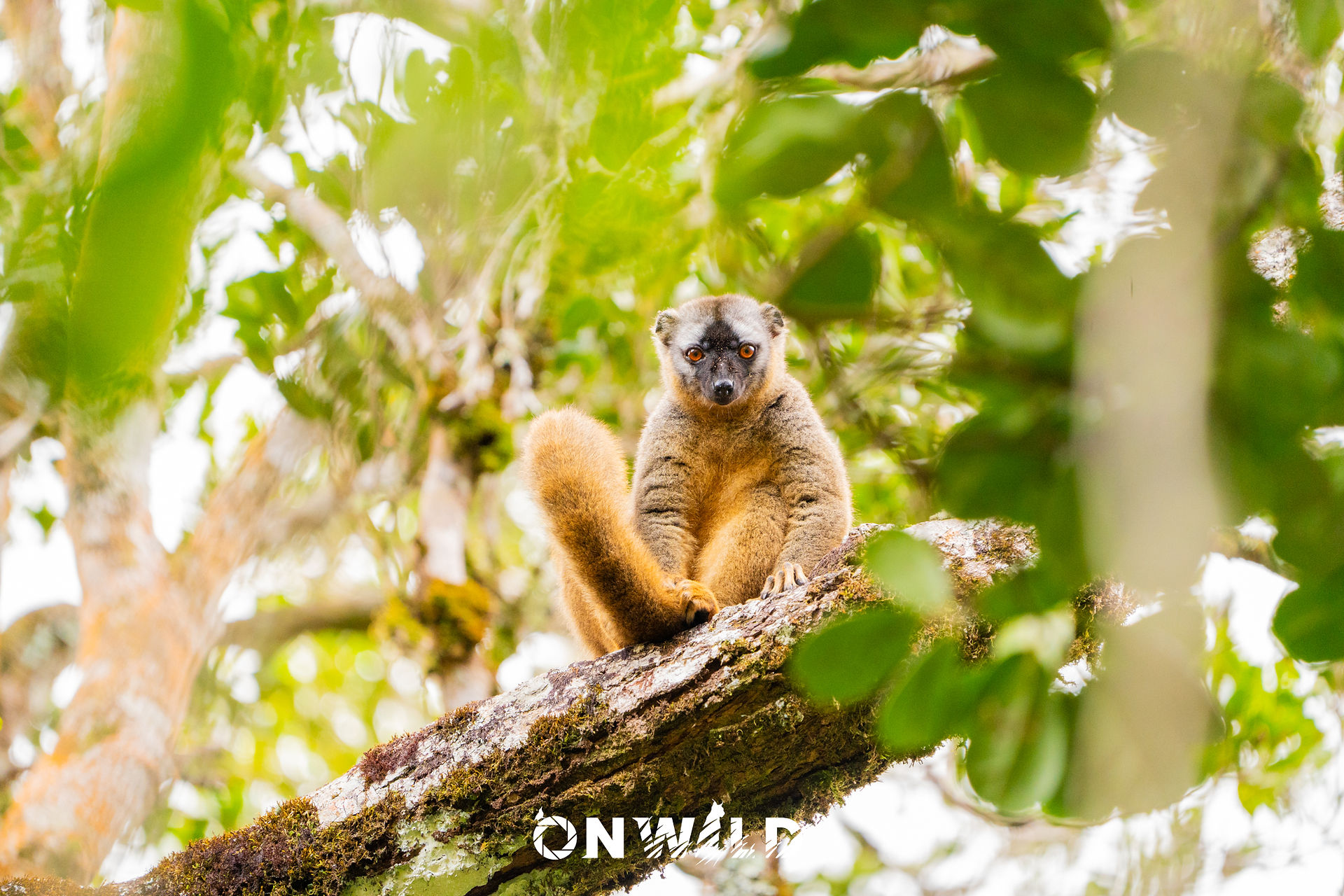
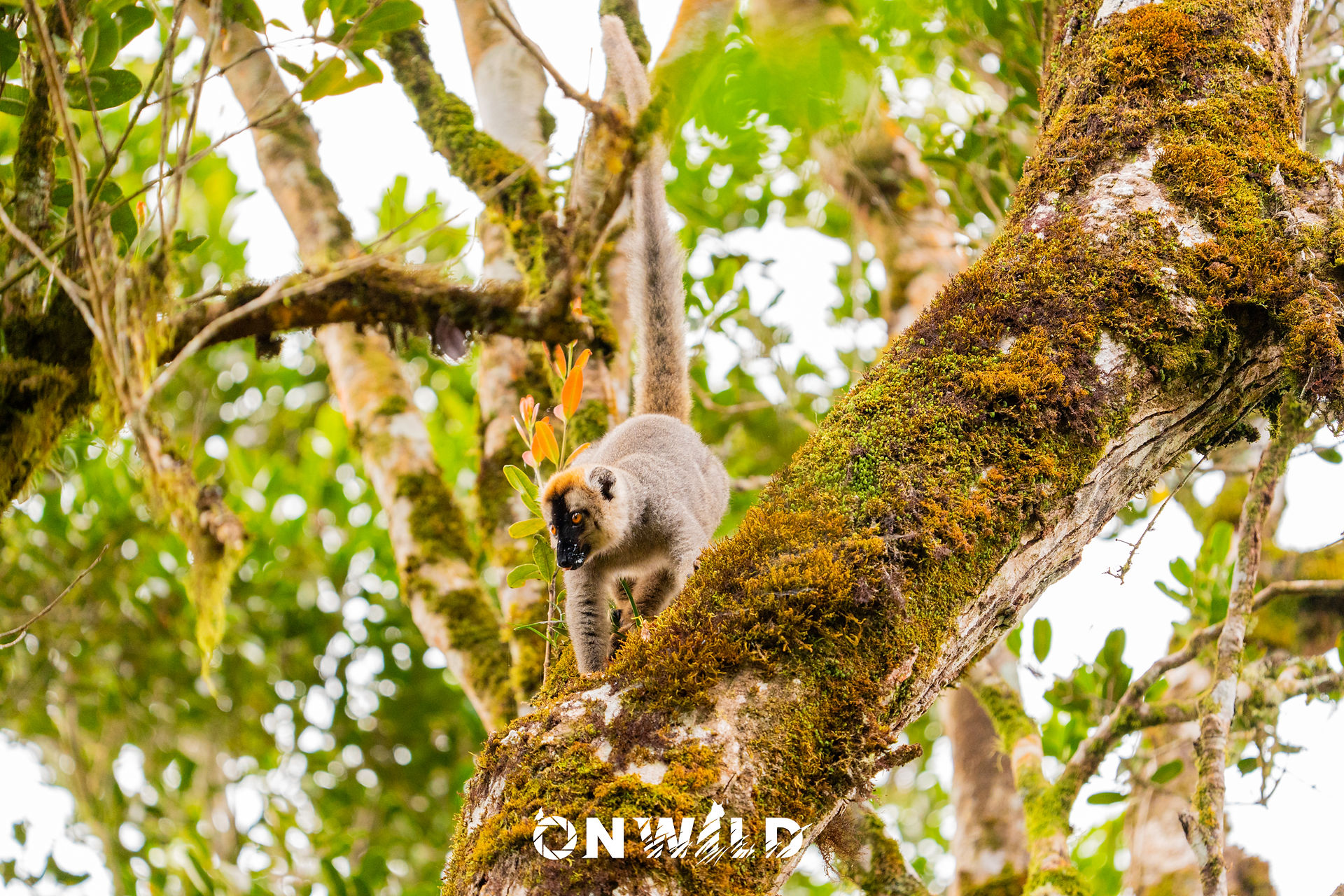
At the same time, I did not want to exhaust myself, knowing that the next day we would have to hike all the way back. Suddenly, we heard lemurs close to our tent, coming from the direction of that path.
I grabbed the camera and tripod and started trying to film them. I knew it would not be easy, but we had the whole afternoon free, so I had to take advantage of it.
I followed them, trying to find a good angle. But the further down I went, the harder it became. The forest grew denser, and I ended up directly below them. I climbed back up, searching for openings in the canopy where I could film.
They kept moving, although some individuals lagged behind. I managed to get a few shots before they disappeared into the canopy. After that, I returned to camp to rest a bit more.






Preparing for the night capture session
The late afternoon was spent preparing the equipment for the night session. This time, Vanessa and I would not be participating.
In Vanessa’s case, it was due to the difficulty of reaching the site. In my case, it was a team decision to maximize efficiency in capturing bats. The plan was to set the nets right at the cave entrance, in a narrow space, almost like a trench formed by water erosion over time.
The processing of the bats would also happen there. My presence would only get in the way. At the time, I had not taken the rabies vaccine, so I was not allowed to handle bats. Bringing photography equipment was also not an option. There simply was not enough space to photograph either the team or the bats.
With the two guides, Ricardo, and Thalya, the team was more than capable of doing the work effectively.
Even though I really wanted to stay up, photograph bats, and help however I could, I ended up staying in the tent to rest. I went to bed early and tried to recover energy, while also starting to pack things.
The next day would be demanding: the full hike back to the ValBio Center. In other words, both journeys combined into a single day.




Comments