


A scientific expedition with a taste of vacation: Another hike and a night of bats – August 6

We woke up feeling satisfied after the previous night, but without much time to fully enjoy it. We had to pack up camp quickly so the carriers could take our equipment, tents, and clothing to the next campsite. Even though we had stayed up late trying to capture bats, the carriers were already at camp waiting for us at sunrise. That meant one thing: another long hike ahead.
Was I prepared? Not at all. Spending the night trying to capture bats, carrying equipment, photographing animals, then waking up early to search for more… it was all starting to take a toll on my body. Still, those who knew the area kept saying that the next campsite was incredible, and that it was full of scientists conducting all kinds of research. That was enough to give me a boost of energy. Right after breakfast, I started packing everything.

Packing up the first camp
The second night felt even better than the first. The physical exhaustion had faded, I woke up early and started packing. Our clothing bags and the tent had to be ready before breakfast. Our cook, yes, we had a cook dedicated to our team, was already preparing breakfast and lunch. He had woken up even earlier than us to get everything ready.
Hungry and eager to explore, I packed quickly. I waited for Vanessa to finish her packing and we headed to breakfast. Our backpacks were placed inside rice sacks and sent ahead with the carriers to the next camp. I think they arrived there before we even finished eating.
Breakfasts were very simple. Life in the forest dictates that. In the first few days, we had bread and butter. There was coffee, but since I do not drink it, I stuck to water. There was also a kind of tea made from rice cooking water, which I really did not like. It tasted burnt, so I preferred to just drink water. On other days, breakfast was plain rice with scrambled eggs.


A new hike
With a full stomach, it was time to start walking again towards the new camp, which was even deeper in the forest. I kept asking how long it would take. Some said three hours, others said more than five. I had no idea how long we would be walking, but I was ready to look for more animals along the way.
At the front were our guides, Mamatina and Nirina, along with our cook. Behind them were usually Ricardo and Thalya, and finally Vanessa and I. Along the way, Ricardo and Thalya were placing audiomoths, which would later be collected on our return.
This is where things started to get more difficult. Vanessa unfortunately developed a health issue. Nothing serious, and it would not stop the expedition, but it required some adjustments. She developed a knee problem that prevented her from walking at her normal pace. As a result, we became the slowest pair.
The plan was for the rest of the team to continue placing the audiomoths ahead of us, so that by the time we caught up, everything would already be done. And that is exactly what happened. To reduce the strain on Vanessa, I transferred everything from her backpack into mine. The idea was to share the load, but in the end I carried it all. Her bag contained extra jackets, our food, and some cables I was carrying. I have no complaints. These setbacks are part of the process, and we have to adapt. Later on, I found a solution.
By the end of the day, we reached the campsite. Not exactly the central area, but the upper section where our guides were preparing the ground for our tents. This time, there were no proper shelter structures, but the speed at which they built a cover was impressive. A branch here, another there, rope tied in a few places, and suddenly there was a functional space for our tent in the middle of the forest.
Before even heading to the main camp area, we had to set everything up so that our gear could be safely stored inside the tents while we planned the night session.
First, we had to figure out which rice sack belonged to whom and locate our tents inside them. After a bit of trial and error, we managed to organize everything and set up our tent. It was slightly tilted, but stable enough to sleep without sliding downhill. I mentioned we were at the top of the camp, and that was quite literal. We were on a ridge. The path was the only flat area, and everything else sloped downward. Our tent, being for two people, was the largest and had to be placed in the biggest available space, which also meant it was closer to the edge and more inclined.
With the tents ready, it was time to explore the central area of the camp. We located the dining area, the bathroom, and the river where we would collect water. Only then did we realize how large the camp actually was, spread across a wide section of the forest on a gentle slope, with multiple tents arranged on small terraces.
It did not feel like we were kilometers away from civilization. We were in the middle of dense forest, surrounded by lemurs. At times, they would start interacting loudly with each other, breaking the silence of the forest. It was an indescribable feeling.


A walk through the forest
Despite the excitement, there was work to do. We had another night planned to try and capture bats, and we needed to choose the location. We also had a couple of audiomoths left to deploy so they could record for one or two nights.
We gathered as a team and defined the plan. Due to Vanessa’s condition, she stayed at camp to prepare the equipment for the night session, checking the nets, organizing the bags, and making sure everything we needed was ready. Ricardo went with Nirina to inspect a nearby cave. That left me and Thalya to place the remaining audiomoths, guided by Mamatina.
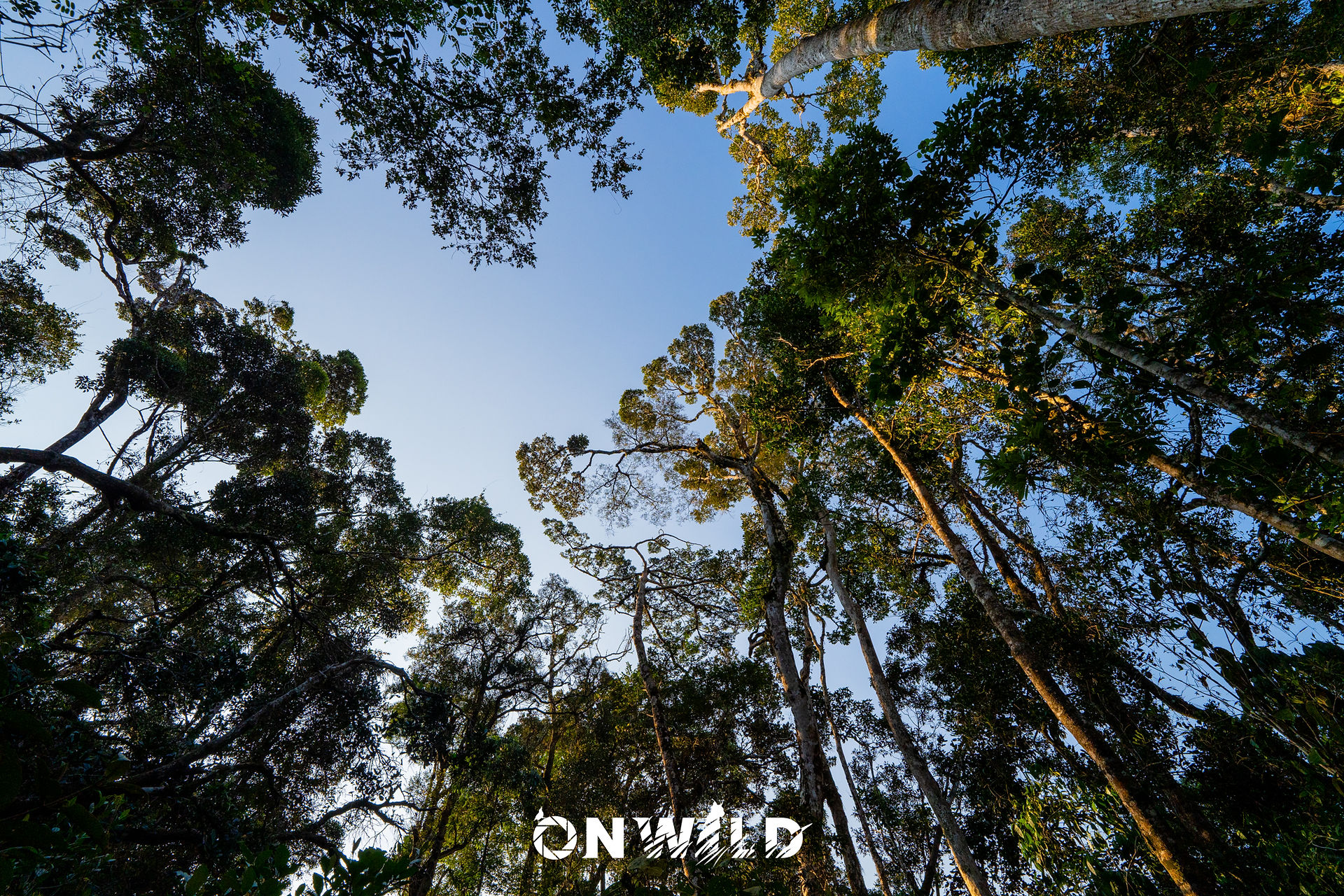
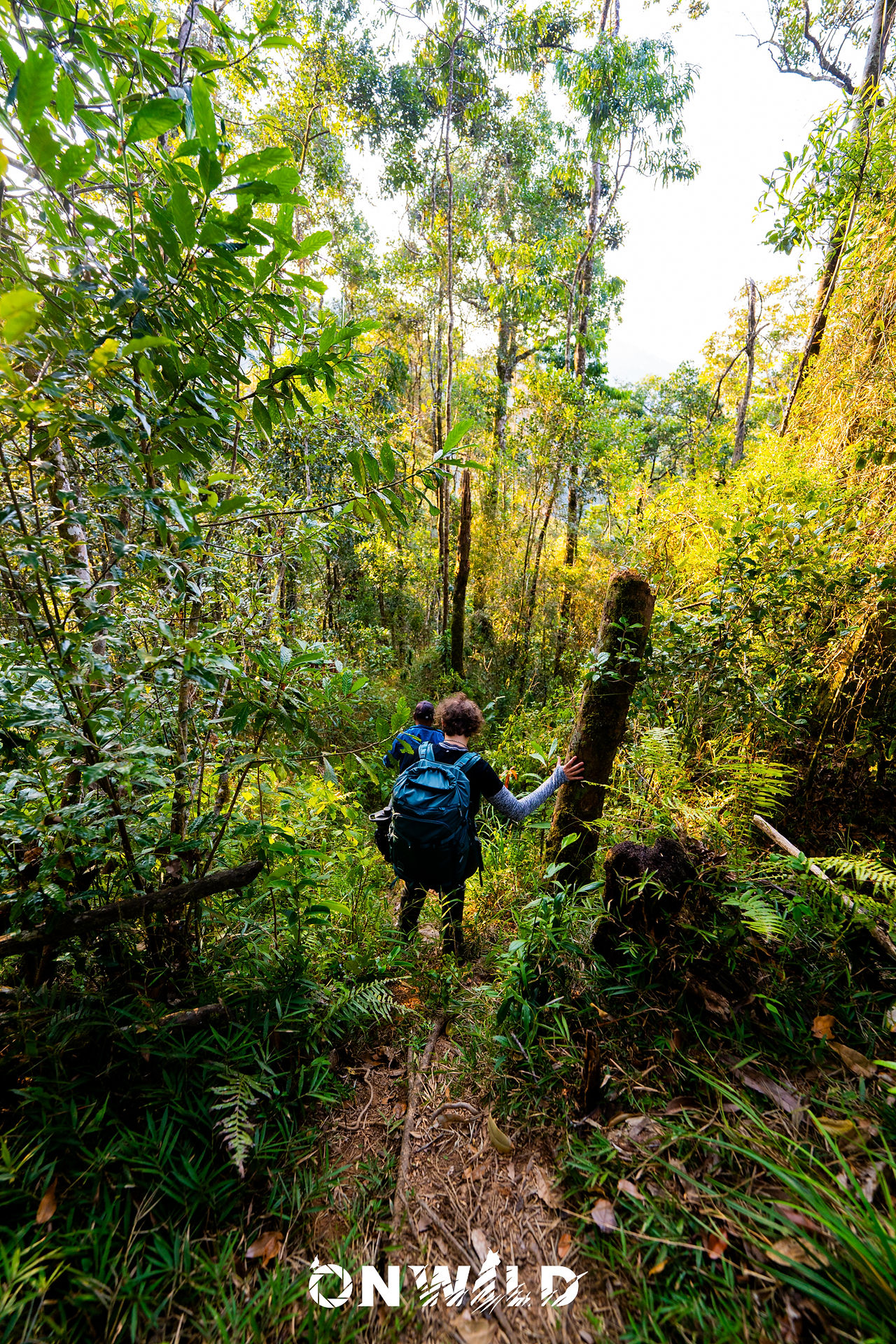
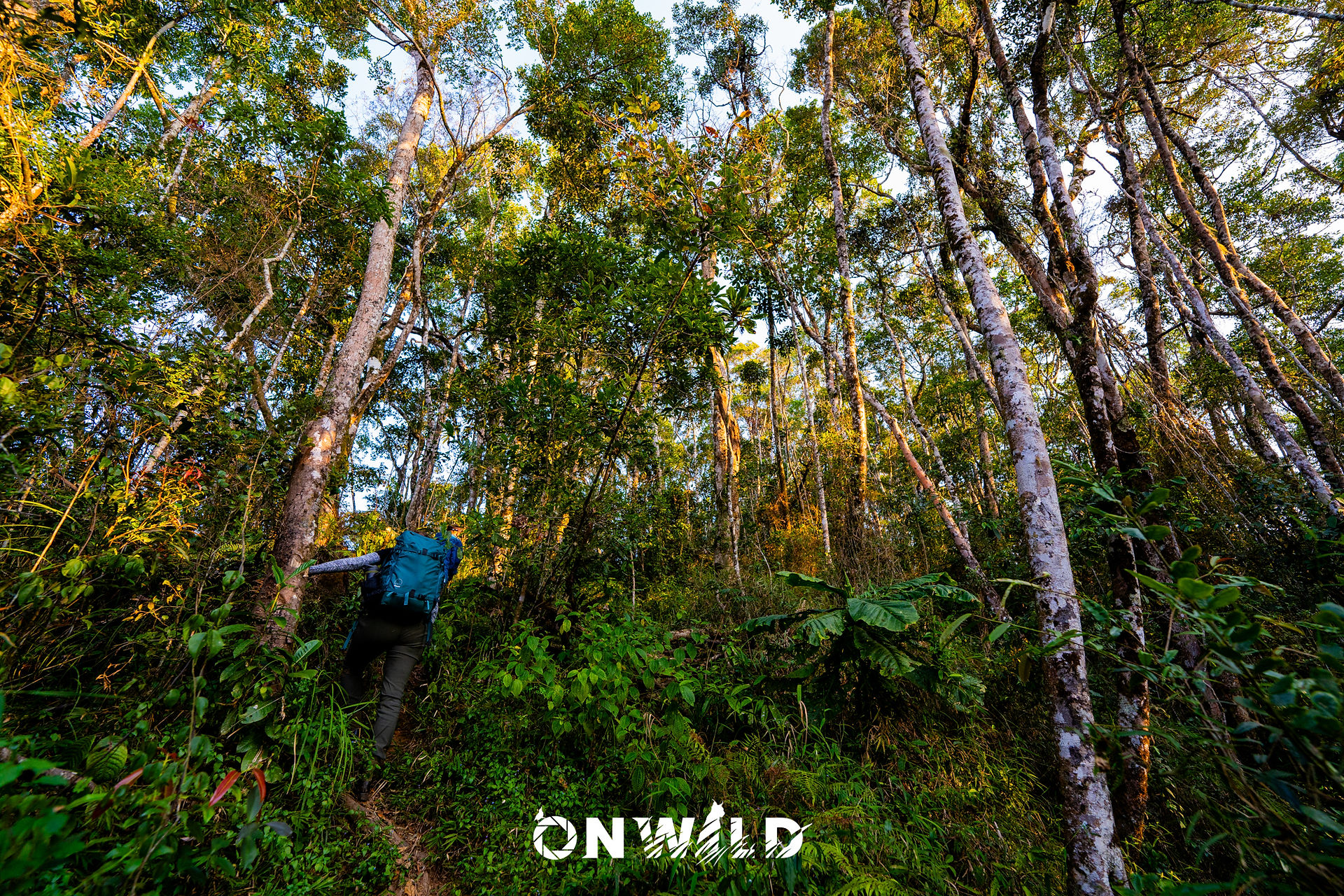
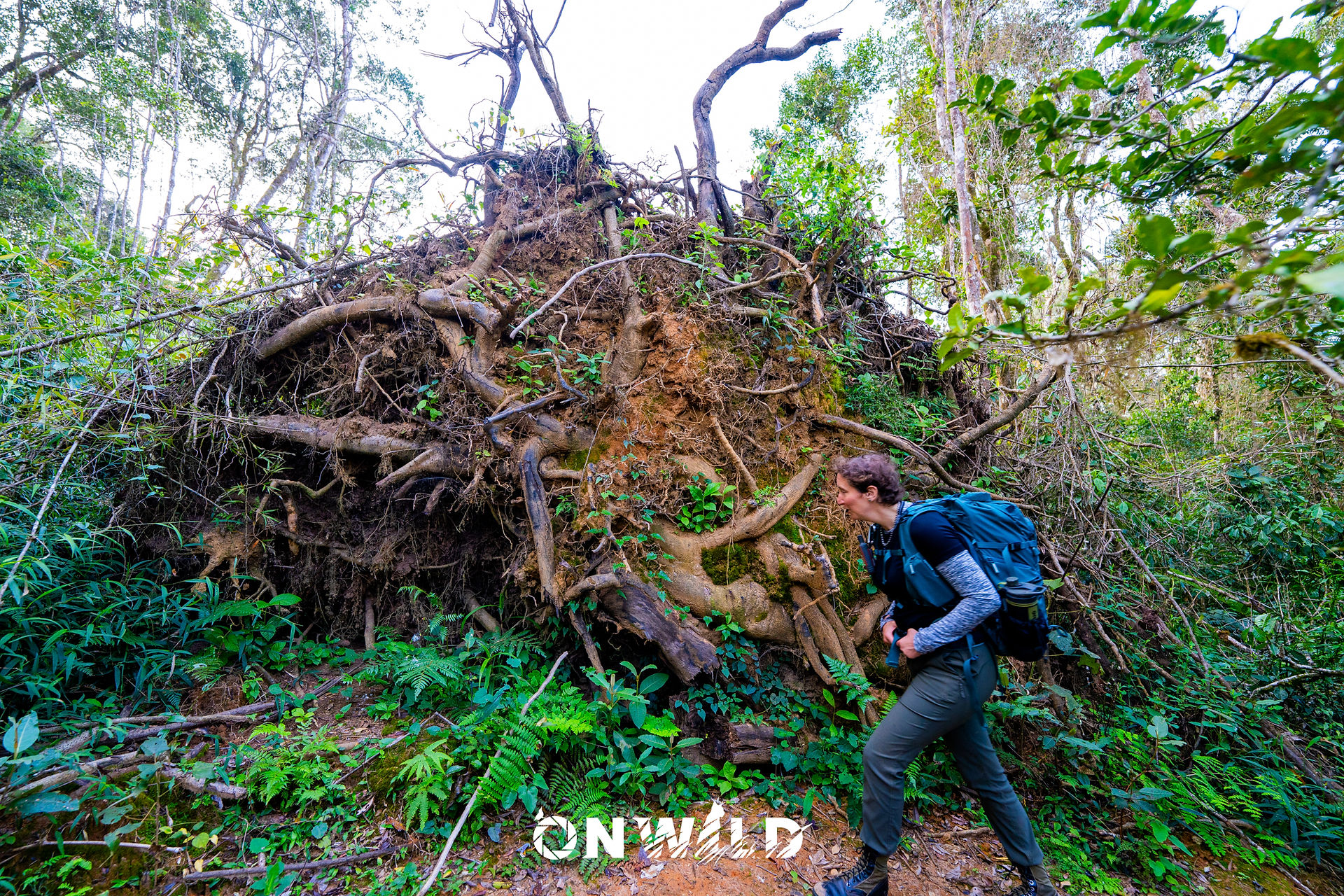
I prepared my photography gear and followed them. I knew the pace would be fast, so I left the Sony 200–600mm in the tent and carried only the macro lens with flash, a wide-angle lens, and a lens I had barely used before, the Sony 70–200mm f/2.8. It would not be ideal for wildlife like birds or lemurs, but it gave me the opportunity to do something I had not yet done: photograph the forest itself.
All those shades of green, a landscape with no clear background, just layers of leaves and tall trees. We followed narrow trails used only by researchers studying lemurs, paths that were quickly swallowed by vegetation. If I fell just a few meters behind, I would lose sight of them. There were side paths branching off in different directions, and although we had a planned route and Vanessa’s phone for navigation, it would have been very easy to get lost if we got separated.
Vanessa’s phone was the only one with an offline map app. There was no signal in the forest, only satellite communication, so we had downloaded the maps in advance. It worked as a GPS, tracking our location in real time.
After placing all the audiomoths, we returned to camp just in time for a short break before setting up the nets.









The bat cave
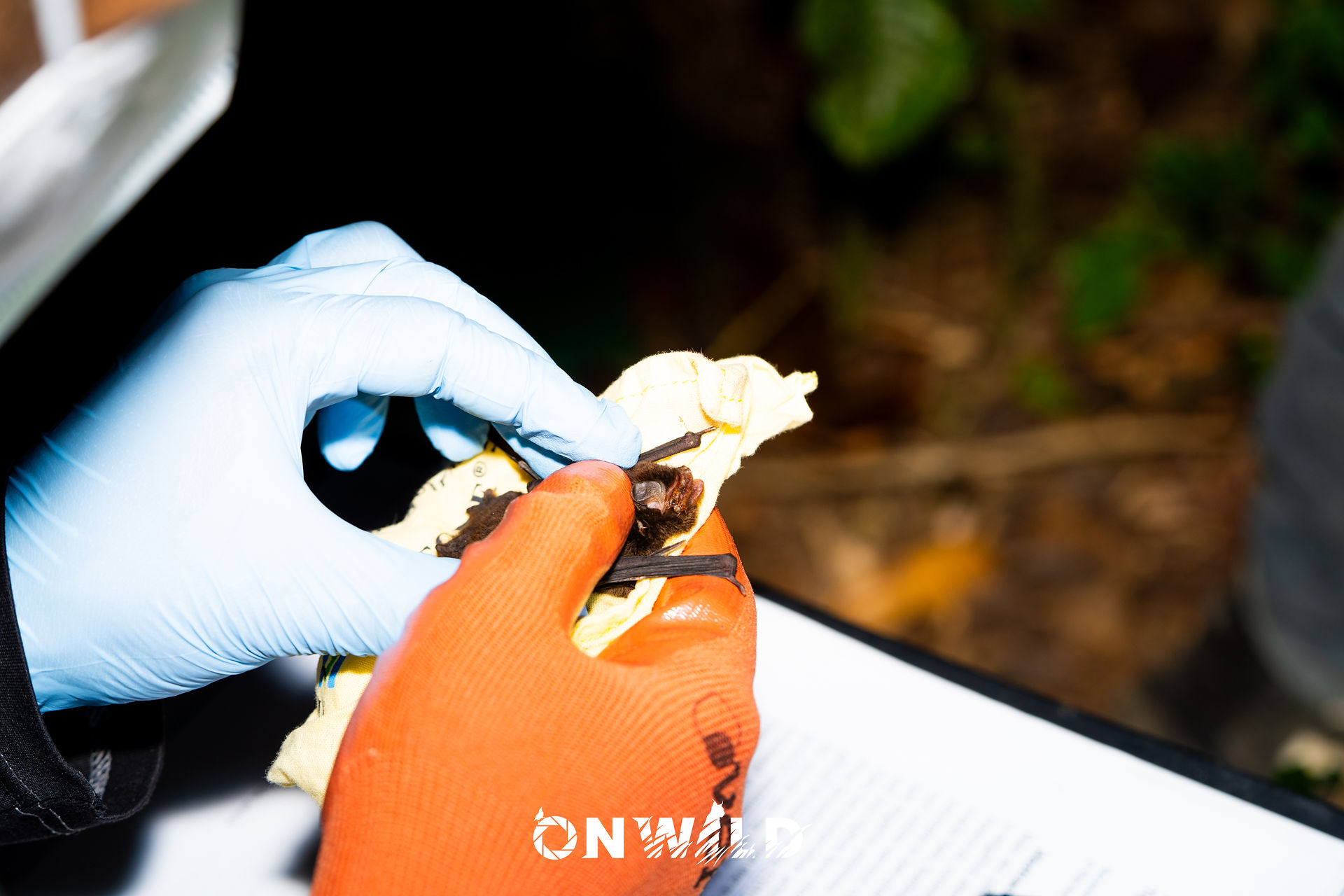
This night was different. We set up the nets along a path near a small cave where bats were roosting. The goal was to capture them while they were hunting near the cave, and also observe their movement patterns. We began planning how to position the nets at the cave entrance.
We did not capture as many bats as we had hoped, but we managed to catch two. That was already a success, considering we had caught none in previous nights. It boosted everyone’s morale and gave us confidence for the following day. We were able to define a clear strategy for capturing bats as they exited the cave, including where to place the nets and how to guide their movement. Ricardo handled that planning exceptionally well.
Unfortunately, Vanessa was not able to walk that night and could not make it down, cross the river, and join the team during the capture session. I returned to camp midway through the session to have dinner with her, and later joined her again after everything ended for another night sleeping in the middle of the forest.



Comments